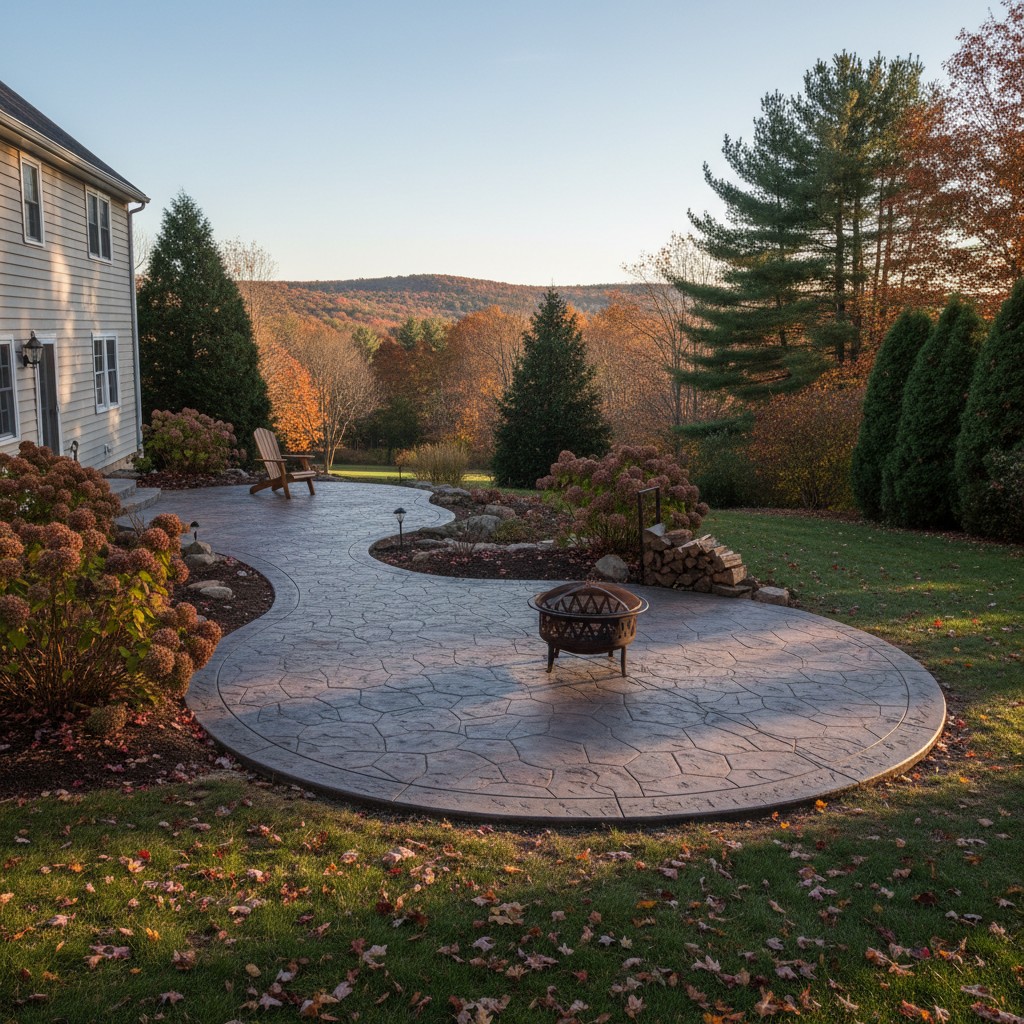
You've seen those beautiful stamped concrete patios and walkways around town, maybe even thought about one for your own place. They really do add a lot of curb appeal and function. But here in Hartford, with our wild New England weather, getting it done right and keeping it looking good isn't just about picking a pattern. It's all about timing and smart year-round care.
When's the Best Time to Schedule Stamped Concrete Work?
This is probably the most common question I get. Everyone wants their new patio ready for summer, right? And that's totally understandable. But when it comes to concrete, especially stamped concrete, you can't just rush it. The sweet spot for pouring concrete in our climate is usually spring and fall.
Think about it: concrete needs to cure properly. That's the chemical process where it hardens and gains strength. It needs a Goldilocks scenario – not too hot, not too cold. If it's too hot, like those sweltering July and August days we get, the water in the mix evaporates too fast. That can lead to cracking and a weaker slab. We've got to work super fast, add retardants, and sometimes even mist the surface, which isn't ideal for stamping patterns.
Too cold, and the water can freeze before the concrete sets, which is a disaster. That's why you won't see us pouring much once the ground starts to freeze up, usually late November through March. We're talking about consistent temperatures, not just a warm afternoon here and there.
So, late April through June, and then again September through October, are generally your best bets. The ground is stable, the air temperatures are moderate, and we can take our time to get that perfect stamp and finish. Planning ahead for these windows is crucial. Don't wait until May to call if you want it done by July; we're usually booked solid by then.
Weather Conditions That Affect the Job
Beyond just temperature, other weather elements play a huge role. You wouldn't believe how many times I've had to reschedule a pour because of unexpected rain or wind.
- Rain: This is a big one. You absolutely cannot pour concrete in the rain. It messes with the water-cement ratio, washes away the surface paste, and can ruin the finish, especially for stamped concrete where we're applying color hardeners and release agents. Even a light drizzle can cause problems. We need a dry day, and ideally, a dry night after the pour too.
- Wind: Strong winds can dry out the surface of the concrete too quickly, similar to hot temperatures. This leads to plastic shrinkage cracking. It also makes applying and working with color hardeners and release agents a nightmare because they can blow around.
- Humidity: High humidity can slow down the drying process, which isn't always bad, but it means we have to adjust our timing. Low humidity, combined with wind or heat, can accelerate drying too much.
- Sun Exposure: Direct, intense sunlight can also cause rapid drying and issues with color consistency on stamped surfaces. Sometimes we'll even set up temporary shading if it's unavoidable.
It's a delicate balance, and that's why an experienced contractor like Hartford Concrete Paving knows how to read the forecast and make the call. Sometimes it means pushing a job back a day or two, but trust me, it's always better to wait for the right conditions than to rush it and end up with a subpar product.
Protecting Your Stamped Concrete Investment Year-Round
Okay, so you've got your beautiful new stamped concrete patio. How do you keep it looking great through our tough Hartford winters and humid summers? It's not rocket science, but it does take a little regular attention.
First off, sealing is key. We'll apply a high-quality sealer once the concrete has fully cured. This protects the surface from stains, UV damage (which can fade colors), and helps prevent water penetration, which is vital for preventing freeze-thaw damage. You'll want to reseal your stamped concrete every 2-3 years, depending on traffic and exposure. It's a pretty straightforward process, and you can even do it yourself with the right product, or we can handle it for you.
During the winter months, be careful with de-icing agents. NEVER use rock salt (sodium chloride) or any de-icer containing ammonium nitrates or ammonium sulfates on your concrete. These can aggressively attack and spall the concrete surface. Look for de-icers labeled